15 Brand Logos with Real Mythological Origins (And Why It Works)
Discover which famous brands actually use Greek mythology in their logos and names, from Nike's wings to Versace's Medusa. Verified stories only.
Your brand needs a story that sticks. Not a tagline people forget, but a narrative that lodges in the collective unconscious and refuses to leave. Some of the world's most valuable brands figured this out by borrowing stories that are already thousands of years old.
Greek mythology isn't just ancient literature. It's a shortcut to emotional resonance that marketers have been exploiting for over a century. When Nike puts wings on their shoes, they're not just decorating, they're invoking victory itself. When Versace stamps Medusa on a handbag, they're selling danger and desire in a single glance.
But here's what most articles on this topic get wrong: they include brands that have no mythological connection at all. McDonald's golden arches? Just architecture. Apple's logo? Named after a fruit, designed by committee. No Zeus, no Athena, no hidden meaning.
This guide separates fact from marketing fiction. Every brand below has a verified, documented connection to mythology, with sources you can check yourself.
Table of Contents
- Why Mythology Works in Branding
- Nike: The Winged Goddess of Victory
- Starbucks: The Siren's Call
- Versace: Medusa's Gaze
- Goodyear: Mercury's Winged Foot
- Maserati: Neptune's Trident
- ASUS: The Spirit of Pegasus
- NBC: The Eyes of Hera
- Pandora: The First Woman
- Tennessee Titans: The Primordial Gods
- Ajax: The Trojan War Hero
- Olympus: Home of the Gods
- Dove: Aphrodite's Sacred Bird
- Trident: Poseidon's Weapon
- Hermès: The Messenger God
- Amazon: The Warrior Women
- Should Your Brand Use Mythology?
- FAQ
- How We Researched This
Why Mythology Works in Branding
Before examining specific brands, it's worth understanding why mythology creates such powerful brand connections.
Carl Jung's research on archetypes revealed that humans share a "collective unconscious" filled with universal symbols and stories. When a brand invokes mythology, it taps into patterns that have resonated across cultures for millennia.
Brand strategists at Inkbot Design note that "when a brand references Greek myths in their storytelling, it automatically benefits from thousands of years of symbolic meaning."
The practical benefits are clear:
| Benefit | How Mythology Delivers It |
|---|---|
| Instant recognition | Symbols like wings, tridents, and serpents carry pre-loaded meaning |
| Emotional depth | Mythological figures embody complex emotions (victory, desire, power) |
| Timelessness | Stories that lasted 3,000 years won't feel dated next quarter |
| Differentiation | Mythological positioning is harder to copy than feature claims |
Now let's examine the brands that have used this strategy most effectively.
Nike: The Winged Goddess of Victory
The Legend: Ancient Greek storytellers invented a character called Nike (Νίκη), imagined as a winged figure representing victory. In their tales, she supposedly sat beside Zeus on Olympus, flying over battlefields to reward winners with glory and fame.
The Brand Connection: The Nike swoosh represents the goddess's wing. Carolyn Davidson, a graphic design student at Portland State University, created the logo in 1971 for $35. Co-founder Phil Knight's brief was simple: create a stripe that conveys motion and doesn't look like Adidas.
Davidson chose a shape inspired by Nike's wings because it suggested speed and victory, perfect for athletic footwear. Crowdspring's logo analysis notes that the swoosh has become so iconic that Nike removed their name from the logo entirely in 1995, trusting the wing alone.
Why It Works: Athletic performance is fundamentally about victory. Nike's mythology alignment is so precise that their brand essentially owns the concept of winning.

Related reading: 12 Principles of Design Followed by Nike
Starbucks: The Siren's Call
The Legend: Ancient Greek folklore imagined creatures called Sirens - fictional beings who supposedly lured sailors with enchanting songs, causing shipwrecks on rocky coasts. The Starbucks figure is specifically a melusine, a two-tailed mermaid invented in medieval European stories.
The Brand Connection: When founders Jerry Baldwin, Zev Siegl, and Gordon Bowker launched their coffee company in Seattle in 1971, they wanted imagery connected to the sea. According to Starbucks' official history, designer Terry Heckler found a 16th-century Norse woodcut of a twin-tailed siren and adapted it for the logo.
The founders' logic: just as sirens lured sailors irresistibly toward them, Starbucks would lure coffee lovers. Seattle's maritime heritage made the ocean connection fitting.
Why It Works: The siren metaphor perfectly captures the addictive quality of their product. You know you're being lured, and you go anyway.
Related reading: Starbucks Logo Explained: Complete History & Evolution
Versace: Medusa's Gaze
The Legend: Greek storytellers created the character of Medusa - a fictional Gorgon whose gaze supposedly turned onlookers to stone. In the tales, she was imagined as a beautiful maiden transformed into a monster. Ancient Greeks used her image as a protective symbol on shields and temples.
The Brand Connection: As documented by Logo.com, Gianni Versace grew up in Reggio di Calabria in southern Italy, where he and his sister Donatella played among ancient Roman ruins. In a mosaic floor, they discovered a Medusa head that stayed with Gianni for life.
When he launched his fashion house in 1978, he initially used only his name. But in 1993, he added the Medusa head from his childhood memory.
Donatella Versace explained her brother's reasoning to Adweek: "When I asked Gianni why he chose Medusa's head, he told me he thought that whoever falls in love with Medusa can't flee from her."
Why It Works: Versace's Medusa communicates danger, beauty, and the inability to look away. For a fashion brand selling desire and attraction, it's perfect positioning.

Goodyear: Mercury's Winged Foot
The Legend: Ancient storytellers imagined a character called Hermes (called Mercury in Roman tales) - a swift messenger who supposedly carried news between fictional gods. In these stories, he was said to protect travelers and merchants, wearing magical winged sandals called talaria.
The Brand Connection: According to Goodyear's corporate history, founder Frank Seiberling was inspired by a statue of Mercury that stood on the newel post of his Akron, Ohio home. During an 1898 meeting, he suggested using Mercury's winged foot as the company logo.
The symbolism was intentional: the mythical Mercury character was known in stories as the "swift carrier of good news" and protector of travelers - ideal imagery for a tire company promising speed and safety.
Why It Works: Tires are fundamentally about movement and travel. Mercury's associations with speed, commerce, and protecting journeys align perfectly with what tire buyers want.

Maserati: Neptune's Trident
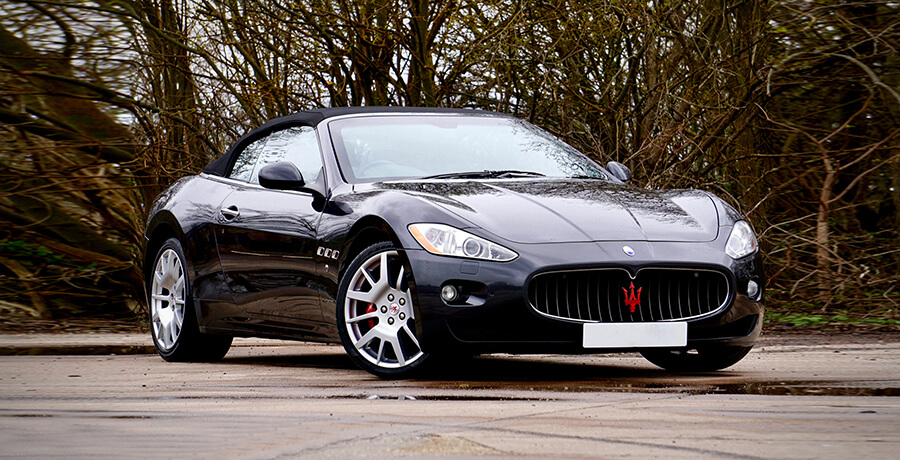
The Legend: The ancient Greeks invented Poseidon (Romans called him Neptune) as a fictional character who supposedly controlled the seas in their folklore. Their stories described a magical trident that could - according to legend - summon storms or calm waters.
The Brand Connection: The Maserati brothers founded their company in Bologna, Italy in 1914. In Bologna's central square, Piazza Maggiore, stands the famous Fountain of Neptune featuring a statue of the god holding his trident.
Brand historians note that the brothers chose Neptune's trident to represent power, vigor, and strength, qualities they wanted in their luxury sports cars.
Why It Works: The trident communicates authority and raw power without saying a word. For a luxury performance car, that's exactly the message.
ASUS: The Spirit of Pegasus
The Legend: Greek folklore imagined Pegasus as a fictional winged horse, supposedly born from Medusa's blood in one of their tales. In these ancient stories, the character symbolized wisdom, fame, and the ability to soar to new heights.
The Brand Connection: When a group of engineers left Acer to found their own company in Taiwan in 1989, they chose "Pegasus" as their name. According to ASUS's official brand story, they then made a strategic decision: drop the first three letters to start with "A" and appear earlier in alphabetical listings.
In the pre-internet era, this gave them visibility advantages in directories, catalogs, and vendor lists. The mythology connection remained, the name was "ASUS."
Why It Works: Pegasus represents the combination of strength and transcendence. For a technology company promising to help users "soar to new heights," the winged horse mythology fits perfectly.

NBC: The Eyes of Hera
The Legend: Greek storytellers invented a tale about a fictional character called Hera who supposedly had a servant named Argus Panoptes - imagined as a giant with one hundred eyes who never fully slept. According to the story, after Argus was killed, his eyes were placed on the tail feathers of the peacock.
The Brand Connection: PopIcon's history of the NBC peacock documents that John J. Graham designed the original peacock in 1956 to showcase NBC's color broadcasting capabilities. The peacock's colorful feathers demonstrated what color TV could do.
The folklore connection adds depth: just as the fictional Argus character supposedly watched everything in the tales, NBC's news division claims to see all and report all. The "all-seeing" symbolism aligns with their journalism mission.
Why It Works: News organizations need to project vigilance and awareness. The hundred-eyed peacock from Greek folklore delivers that message visually.

Pandora: The First Woman
The Legend: Greek storytellers invented the character of Pandora - imagined as the first human woman in their tales, supposedly created as a punishment in the story. Her name means "all-gifted" because, according to the legend, each fictional god contributed something to her creation. The famous tale describes her opening a jar (mistranslated as "box") that released evils into the world, leaving only hope inside.
The Brand Connection: Brand naming analysts note that the jewelry company Pandora (founded in Copenhagen in 1982) likely chose the name for its meaning of "all-gifted." Jewelry is traditionally given as gifts, and Pandora's charm bracelets allow customers to collect gifts over time.
The positive interpretation focuses on hope remaining in the box, and on the character of Pandora being endowed with gifts in the story.
Why It Works: The "all-gifted" meaning transforms a dark myth into positive brand positioning for gift-giving occasions.

Tennessee Titans: The Primordial Gods
The Legend: Greek storytellers invented the Titans as fictional primordial characters who supposedly ruled during a mythical "Golden Age" in their tales. These imaginary figures represented raw, elemental forces: Cronus (time), Atlas (endurance), Prometheus (foresight).
The Brand Connection: When the Houston Oilers relocated to Tennessee in 1997, owner Bud Adams needed a new identity. CBS News reported his explanation: "We wanted a new nickname to reflect strength, leadership and other heroic qualities... Nashville is known as the 'Athens of the South,' which makes the Titans name very appropriate."
Nashville earned that nickname for its classical architecture, including a full-scale replica of the Parthenon. The Titans connection reinforced the city's classical identity.
Why It Works: Football requires raw power and elemental strength. In the tales, the Titans supposedly predated the Olympic characters, representing primordial force.

Ajax: The Trojan War Hero
The Legend: Greek storytellers created the fictional character Ajax (Aias in Greek) as a legendary warrior in their Trojan War tales. Homer's Iliad describes him as supposedly second only to Achilles in strength and bravery, wielding a massive shield of seven ox-hides layered with bronze.
The Brand Connection: The Ajax cleaning brand, introduced by Colgate-Palmolive in 1947, drew its name from this hero known for his strength and his role in "cleaning up" battles. The slogan "Stronger than dirt" mirrors Ajax the warrior's reputation for being stronger than his opponents.
Mythology scholars note that Ajax's association with strength and his giant protective shield made him ideal for a product promising to protect homes from dirt and grime.
Why It Works: Cleaning products need to convey power and effectiveness. A legendary warrior known for his unmatched strength delivers that message.

Olympus: Home of the Gods
The Legend: In Greek folklore, storytellers imagined Mount Olympus as the fictional home of their invented characters - the twelve Olympian gods. According to these tales, the mythical figures supposedly held court and feasted there.
The Brand Connection: According to Olympus Corporation's official history, the company chose "Olympus" to reflect their aspiration to create products of legendary quality. Interestingly, their original Japanese name, Takachiho Seisakusho, referenced the Japanese equivalent: Takachiho, where millions of mythical characters were said to live in folklore.
Both naming choices show the company drawing on mythological associations with the highest standards and legendary craftsmanship.
Why It Works: Cameras and optical equipment require precision. Associating with the legendary mountain home suggests products of the highest possible quality.

Dove: Aphrodite's Sacred Bird
The Legend: Greek folklore imagined a character named Aphrodite as a fictional figure representing love, beauty, and desire. In their stories, doves supposedly pulled her chariot and were frequently depicted alongside her in ancient art. The bird came to symbolize love, purity, and beauty in these tales.
The Brand Connection: Dove soap (launched in 1957 by Lever Brothers, now Unilever) chose both its name and logo from this legendary bird. Brand historians suggest the connection was intentional: the fictional Aphrodite represented beauty in Greek tales, and the dove symbolized her imagined bathing rituals.
The message to consumers: use this soap, and channel the beauty these ancient stories celebrated.
Why It Works: Personal care products sell beauty and self-improvement. The goddess of beauty's sacred animal perfectly captures that promise.
Trident: Poseidon's Weapon
The Legend: In Greek folklore, the trident was imagined as the signature weapon of the fictional character Poseidon, supposedly forged by mythical creatures called Cyclopes. According to these tales, it could create earthquakes, summon storms, and calm the seas.
The Brand Connection: Trident gum (introduced in 1964) carries a double meaning. The word "trident" literally means "three teeth" in Latin (tri + dens), and the gum originally promoted three benefits for dental health.
But brand analysts note the folklore connection reinforces the product: the fictional Poseidon's trident was associated with refreshing water and the sea in Greek tales, supporting the gum's fresh, clean positioning.
Why It Works: The dual meaning creates a clever brand story: dental benefits plus mythological associations with cleansing water.

Hermès: The Messenger God
The Legend: Greek folklore imagined a character named Hermes as the mythical patron of trade and travel. Storytellers described him wearing magical winged sandals, supposedly carrying messages between fictional gods and humans.
The Brand Connection: The luxury brand Hermès was founded in 1837 by Thierry Hermès as a harness workshop serving European nobility. The brand is technically named after its founder, not the god.
However, brand analysts have noted the fortunate coincidence: the fictional Hermes character was associated with travel, trade, and elegance in Greek tales. Hermès the brand began with equestrian equipment (travel) and became synonymous with luxury commerce. Whether intentional or serendipitous, the mythological resonance strengthened the brand.
Why It Works: A luxury brand specializing in leather goods, silk scarves, and travel accessories couldn't have a more fitting mythological namesake than the legendary figure of travel and trade.

Amazon: The Warrior Women
The Legend: Greek storytellers invented the Amazons as a fictional tribe of female warriors, imagined with independence, strength, and combat skills. In these tales, they supposedly lived apart from men and raised only their daughters.
The Brand Connection: Jeff Bezos chose "Amazon" after looking through the dictionary and finding "Amazonia," the region around the Amazon River. According to interviews, he was attracted to the river's size and power as a metaphor for unlimited selection.
The river itself was named by Spanish conquistador Francisco de Orellana in 1542 after he claimed to encounter female warriors resembling the mythological Amazons.
So Amazon's mythology connection is indirect: company named for river, river named for myth. But the warrior women's qualities of strength and independence do align with the company's brand personality.
Why It Works: The chain of naming (myth to river to company) creates an interesting brand story, even if the mythology wasn't the primary intention.

Should Your Brand Use Mythology?
Not every brand should raid Greek mythology for positioning. The strategy works when:
When Mythology Fits:
- Your brand attributes genuinely align with a mythological figure
- You can sustain the narrative across all touchpoints
- The mythology adds meaning, not just decoration
- Your audience will recognize the reference
When It Doesn't:
- The connection feels forced or superficial
- You're copying a competitor's mythological territory (Nike owns "victory")
- Your audience won't understand the reference
- The mythology has negative associations you haven't considered
Strategic Framework: Mythology Alignment Check
Ask these questions before committing:
- What is your brand's core promise? (Victory? Beauty? Power? Speed?)
- Which mythological character embodies that promise? (Nike? Aphrodite? Zeus? Hermes?)
- Is that territory unclaimed by competitors?
- Can you tell the mythology story authentically?
- Will it resonate with your specific audience?
If you answered yes to all five, mythology might strengthen your brand narrative. If you hesitated on any, consider other positioning strategies.
FAQ
Why do so many brands use Greek mythology specifically?
Greek folklore has wider recognition in Western markets than other mythological traditions. These ancient stories were preserved in literature, art, and education for over 2,500 years. Most consumers recognize fictional characters like Zeus, Aphrodite, and Medusa even if they've never studied classics.
Is using mythology legal? Are there trademark issues?
Mythological figures themselves cannot be trademarked, they're in the public domain. However, specific logo designs using those figures can be trademarked. You can create a Nike-inspired winged logo, but you cannot copy Nike's specific swoosh.
Do these mythology stories actually help brands sell more?
Direct causation is hard to prove, but the persistence of mythology in successful branding suggests effectiveness. Nike, Versace, and Starbucks consistently rank among the world's most valuable brands. Their mythology associations contribute to the emotional depth that distinguishes them from competitors.
What about brands that claim mythology but don't actually have it?
Many articles include brands like Apple, McDonald's, and BMW in mythology roundups, but these brands have no documented mythological connections. The risk of false claims is brand confusion and lost credibility. This guide includes only brands with verifiable mythology documentation.
Can new brands still use mythology effectively, or is it played out?
Mythology remains available but requires creativity. The obvious figures (Nike, Medusa, Pegasus) are claimed by established brands. Newer brands might explore less-used mythology: Egyptian, Norse, Celtic, or Hindu traditions offer rich symbolism that's underutilized in Western branding.
How We Researched This
This article is based on:
- Official company histories and brand documentation from Nike, Starbucks, Versace, Goodyear, ASUS, and Olympus
- Academic sources on Greek mythology including Britannica and Wikipedia
- Brand analysis from Adweek, Crowdspring, Logo.com, and Inkbot Design
- News coverage from CBS News and PopIcon documenting brand naming decisions
- Cross-verification of all mythology claims against multiple independent sources
We excluded brands commonly included in similar articles (McDonald's, Apple, BMW, Playboy, Adidas, Pepsi, Disney, Twitter/X) because they have no documented mythology connection despite frequent misattribution.
Building a brand that needs to communicate at a deeper level? FullStop's brand strategists help companies develop positioning that resonates with their specific audiences, whether that involves mythology, archetypes, or entirely different approaches.

Co-Founder & Strategic Visionary at FullStop
Co-Founder at FullStop, a branding, digital and software agency he started in 2012. Haris works across brand design, digital marketing, and custom development—helping businesses turn ideas into market-ready products.
Ready to transform your brand?
Our team specializes in strategic branding and digital solutions that drive real business results.


