26 Rebranding Success Stories: What CEOs Can Learn From the World's Best Brand Transformations
Strategic lessons from LEGO's bankruptcy recovery, Old Spice's 107% sales surge, and 24 more brand transformations - with ROI data and frameworks for executives.
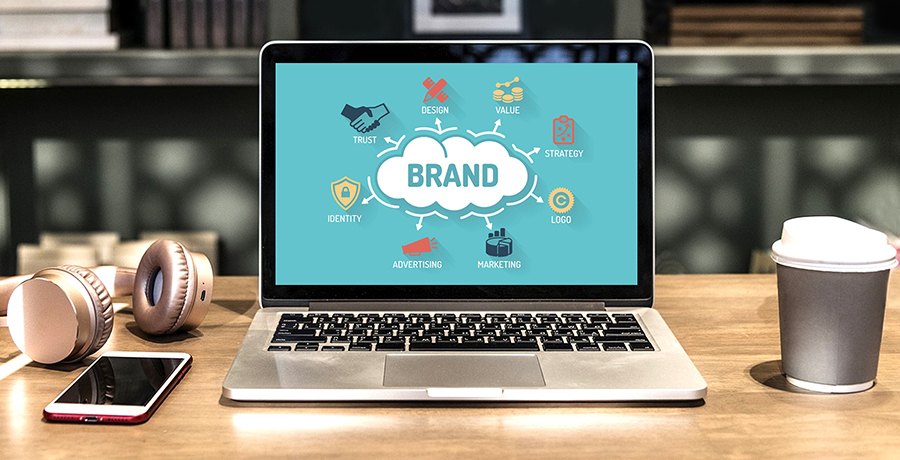
Your board is questioning whether your brand still resonates. Your CMO wants a refresh. And somewhere in your inbox sits an agency proposal promising transformation.
Before signing anything, consider this: Jaguar's 2024 rebrand cost them a 97% European sales drop and their design chief's job. Tropicana's 2009 package redesign lost $30 million in sales in just two months. Gap reversed their rebrand in six days.
But done right? Old Spice saw 107% sales growth in a single month. LEGO recovered from losing $1 million per day to become the world's most valuable toy company. Starbucks' stock nearly tripled after dropping its name from the logo.
The difference between these outcomes isn't luck. It's strategy.
Is Your Brand Ready for Transformation?
Use this quick assessment to evaluate whether your brand situation aligns with the success patterns we analyzed across 26 rebrands. Score each factor honestly.
How We Approached This Research
This isn't another design gallery. Having partnered with over 1,000 brands since 2012, we've seen the rebrand decision go well, and we've seen it destroy shareholder value.
For this guide, we analyzed the actual business outcomes of 26 major rebrands, sourcing revenue data from Statista, stock performance from MacroTrends, and strategic frameworks from Harvard Business Review and McKinsey.
We categorized each rebrand by strategic intent and measured success by business results, not design awards. If you're considering a rebrand, we recommend first reading our companion piece: When to Rebrand: The CEO's Decision Framework.
The Three Categories of Successful Rebrands
Not all rebrands serve the same purpose. Based on our analysis, successful rebrands fall into three strategic categories:
| Category | Strategic Intent | Typical Trigger | Risk Level |
|---|---|---|---|
| Turnaround | Save a failing brand or reverse negative perception | Financial crisis, reputation damage | High (but necessary) |
| Evolution | Expand beyond original market or product | Business model change, geographic expansion | Medium |
| Simplification | Optimize for digital and global scalability | Digital transformation, international growth | Low |
Category 1: Turnaround Rebrands
These brands were in crisis. The rebrand wasn't optional. It was existential.
1. LEGO: From Bankruptcy to World's Most Valuable Toy Brand

The Crisis: In 2003, LEGO was losing $1 million per day and carried $800 million in debt. Theme parks, clothing lines, and video games had diluted the brand beyond recognition.
The Turnaround: When Jørgen Vig Knudstorp became CEO in 2004, his diagnosis was blunt: LEGO had "lost the plot" by confusing growth with success. His solution: cut product count from 13,000 to 7,000 SKUs, sell non-core businesses, and return to plastic bricks.
The Result: By 2015, LEGO became the world's most profitable toy company. Revenue quadrupled between 2004-2014.
CEO Lesson: Sometimes the best brand strategy is subtraction. If you've lost focus, reclaim your core before expanding again.
2. Apple: The $1 Trillion Comeback

The Crisis: In early 1997, Apple had lost over $1 billion in a year, laid off 3,800 employees, and watched market share shrink from 20% to 8%. The company was "90 days from bankruptcy."
The Turnaround: Steve Jobs returned and immediately canceled 70% of Apple's product line. Then came "Think Different", a campaign that didn't advertise products at all. Instead, it redefined what Apple stood for: creativity, rebellion, and changing the world.
The Result: Apple went from a $1 billion loss in 1997 to a $309 million profit in 1998. Today, market cap exceeds $3 trillion.
CEO Lesson: A rebrand is pointless without operational change. Jobs didn't just change the logo. He changed the products, the structure, and the culture. Brand follows substance.
3. Old Spice: From "Grandpa's Deodorant" to Gen Z Favorite
The Crisis: Old Spice was dying. Young consumers saw it as their grandfather's brand. Sales were declining, and the brand was becoming irrelevant.
The Turnaround: The 2010 "The Man Your Man Could Smell Like" campaign targeted women, who make 60% of body wash purchases. The absurdist humor went viral, generating over 40 million YouTube views in the first week.
The Result: Body wash sales increased 107% in one month. Market share doubled from 3% to 6%. Revenue grew from $280 million (2009) to over $1 billion by 2017.
CEO Lesson: Don't target who uses your product. Target who buys it. Old Spice's insight was that the decision-maker wasn't the user.
4. Burberry: From Gang Wear to Luxury Icon
The Crisis: In the early 2000s, Burberry had become associated with "chavs" (British slang for working-class youth) and football hooligans. The brand's check pattern was appearing on counterfeit goods and being worn by people the luxury market didn't want to associate with.
The Turnaround: Creative director Christopher Bailey overhauled the brand, limiting check pattern usage and introducing celebrity ambassadors like Emma Watson. The focus shifted back to the iconic trench coat and British heritage.
The Result: Revenue exceeded £1 billion for the first time, with 21% year-over-year growth.
2023 Update: Under new creative director Daniel Lee, Burberry returned to its historical equestrian knight logo, reversing the 2018 minimalist rebrand. The lesson? Sometimes going backwards is the right way forward.
5. McDonald's: The "Plan to Win" Turnaround

The Crisis: By early 2003, McDonald's stock had fallen from nearly $50 to below $13. The company posted its first-ever quarterly loss. Health-conscious consumers were abandoning fast food.
The Turnaround: The "Plan to Win" strategy shifted focus from opening new restaurants to improving existing ones. Menu additions like salads and premium coffee targeted health-conscious adults. The "I'm Lovin' It" campaign repositioned the brand for a younger, global audience.
The Result: McDonald's became one of the best-performing stocks of the 2000s, eventually reaching a market cap of over $200 billion.
CEO Lesson: A rebrand without operational change is just a paint job. McDonald's changed the menu, the restaurants, and the experience, not just the marketing.
Category 2: Evolution Rebrands
These brands weren't failing. They were outgrowing their original identity.
6. Starbucks: Dropping the Name to Own the World

The Change: In 2011, Starbucks removed "Starbucks Coffee" from its logo, leaving only the siren. At the time, critics called it risky. Why abandon brand recognition?
The Strategy: CEO Howard Schultz explained: "We've allowed her to come out of the circle in a way that gives us the freedom and flexibility to think beyond coffee." Starbucks was becoming a global consumer company, not just a coffee chain.
The Result: Stock prices nearly tripled. Starbucks expanded into grocery products, teas, and food, all without the "Coffee" limitation.
CEO Lesson: If your name contains your limitation, consider whether it's time to evolve. Apple dropped "Computer." Dunkin' dropped "Donuts." Both outgrew their original categories.
7. Dunkin': From Donuts to Drinks
The Change: In 2019, Dunkin' Donuts officially became just "Dunkin'." The donut was no longer the star. Coffee and beverages drove the majority of sales.
The Strategy: The name change reflected reality. Dunkin' had already shifted to be beverage-first. The rebrand simply aligned perception with the product mix.
The Result: By October 2025, Dunkin' reached 10,000 U.S. stores, joining an exclusive club with Subway, Starbucks, and McDonald's. The Charli D'Amelio partnership drove 20% cold brew sales increase and nearly 60% app download growth.
CEO Lesson: Rebrand to reflect what you've become, not what you wish you were. Dunkin' didn't rebrand to sell more coffee. They rebranded because they already did.
8. Airbnb: Belonging Anywhere
The Change: In 2014, Airbnb replaced its wordmark with the "Bélo", a symbol combining people, places, love, and the letter A.
The Controversy: The internet immediately mocked it, comparing the shape to various body parts. Airbnb pressed on.
The Result: Monthly bookings rose from 15 million (Q2 2014) to 28 million (Q4 2015). Brand recognition jumped from 18% to 74% globally by 2018. Airbnb went public in 2020 at an $86.5 billion valuation.
CEO Lesson: Initial backlash doesn't predict long-term success. Instagram, Airbnb, and Tropicana all faced immediate criticism. Only Tropicana reversed course, and only Tropicana was right to do so.
9. Pepsi: Reclaiming Heritage (2023)
The Change: Pepsi's 2023 redesign was its first major update in 15 years. The word "Pepsi" returned to the center of the globe, in bold black capital letters, a departure from the minimal, lowercase trend.
The Strategy: With Gen Z shifting away from sugary sodas, Pepsi needed to emphasize its zero-sugar variants. The black color tied directly to Pepsi Zero Sugar branding.
The Result: The rebrand achieved 4.6 million incremental reach among Gen Z and a 7% brand lift, while reducing cost per reach by 39%.
CEO Lesson: Heritage can be an asset. While competitors chase minimalism, Pepsi leaned into its history, updated for digital contexts.
10. Instagram: Surviving the Backlash

The Change: In 2016, Instagram replaced its beloved skeuomorphic camera with a gradient-colored glyph.
The Backlash: 70% of 740 analyzed reviews were negative. Users called it "a rejected Starburst flavor."
The Strategy: Instagram's head of design Ian Spalter argued the old icon no longer reflected the platform's evolution from photo filters to full video, Stories, and commerce.
The Result: Within months, users adapted. The logo is now instantly recognizable, and Instagram grew from 400 million to over 2 billion users.
CEO Lesson: If your brand has high-frequency exposure, users will adapt faster than focus groups suggest. The backlash window is temporary.
11. Coca-Cola: Consistent Evolution, Not Revolution

The Non-Change: Unlike competitors, Coca-Cola has never dramatically rebranded. The script logo has remained virtually unchanged since 1887.
The Strategy: Coca-Cola adapts its campaigns, not its identity. "Share a Coke," "Open Happiness," and "Taste the Feeling" all built emotional connections without touching the core brand.
The Result: $43 billion in revenue (2022), up 11%. Brand value consistently ranks among the world's top five.
CEO Lesson: Evolution doesn't require revolution. Sometimes the best rebrand is no rebrand at all, just better marketing execution around a timeless identity.
Category 3: Simplification Rebrands
These brands optimized their identity for the digital age without changing their core positioning.
12. Mastercard: The Wordless Future
The Change: In 2016, Pentagram simplified Mastercard's interlocking circles, removing the stripes and moving the name outside the symbol. By 2019, they dropped the name entirely.
The Strategy: The logo needed to work at 16x16 pixels on mobile app icons. The old design, with its drop shadow and interlocking lines, scaled poorly.
The Result: 80% of people spontaneously recognize the symbol without the Mastercard name. The simplified logo performs better across all digital touchpoints.
CEO Lesson: Digital-first design isn't optional. If your logo doesn't work at favicon size, you have a problem.
13. Shell: A Century of Simplification

The Evolution: Shell's logo has evolved from a realistic mussel shell (1900) to one of the world's most recognized symbols, designed by Raymond Loewy in 1971.
The Strategy: Each iteration removed detail while retaining recognition. The 1971 version was so successful that Shell began dropping the wordmark entirely in 1999.
The Result: Recognized in over 70 countries. The logo has remained virtually unchanged for over 50 years.
CEO Lesson: Great logos are earned, not designed. Shell's recognition came from 100 years of consistent use, not a single brilliant redesign.
14. BMW: Subtle Refinement (2025)
The Change: In 2025, BMW updated its roundel by removing inner chrome details while preserving the blue-and-white propeller design.
The Strategy: Rather than a dramatic overhaul, BMW tightened details for digital rendering while preserving decades of equity.
The Result: The logo maintains instant recognition while performing better on screens. The update passed largely unnoticed by consumers, which was the point.
CEO Lesson: Not every update needs to be announced. Sometimes the best rebrand is one customers don't notice.
15. Volkswagen: Corporate Clarity (2024)
The Change: Volkswagen Group rebranded from "Volkswagen Aktiengesellschaft" to "Volkswagen Group," creating distinction between the corporate parent and the consumer brand.
The Strategy: With 12 brands under its umbrella, VW needed clarity between corporate and consumer communications.
The Result: Multiple 2025 Transform Awards, including Gold for Best Brand Development to Reflect Change of Mission.
CEO Lesson: Corporate rebrands serve different purposes than consumer rebrands. Know your audience.
16. NFL: Digital Reproduction
The Change: The NFL simplified its logo by removing the internal stripes, making it easier to reproduce across digital and broadcast media.
The Strategy: Complex logos render poorly on screens. The simplification improved reproduction without changing recognition.
The Result: The logo remains one of the most recognized in American sports, working seamlessly from stadium screens to mobile apps.
17. Quaker: Heritage Modernization
The Change: The Quaker man has been gradually refined over 140+ years, becoming slimmer, with fewer wrinkles and shorter hair, while maintaining his core identity.
The Strategy: Each update modernizes without disrupting. The "Est. 1877" addition reinforces heritage and trust.
CEO Lesson: Heritage brands can modernize without abandoning their past. The key is evolutionary change, not revolutionary.
18. London Underground: Design Icon
The Change: The roundel, first appearing in 1908, has been gradually simplified and refined, becoming one of the world's most emulated transit logos.
The Result: The design has been adopted and adapted by transit systems globally. It proves that simple geometric shapes scale across decades and technologies.
19. Cadbury: Purple Consistency
The Change: Cadbury has maintained its purple identity since 1914, while simplifying packaging to emphasize the chocolate product and the "glass and a half" tagline.
The Strategy: Consistency creates ownership. Cadbury literally trademarked the specific shade of purple (Pantone 2865c).
CEO Lesson: If you can own a color, own it. Color recognition often precedes logo recognition.
20. Vogue: Editorial Evolution
The Non-Change: Vogue's masthead has remained consistent while covers reflect each era's fashion and culture.
The Strategy: The magazine itself is the brand evolution. Each cover is a statement while the identity remains constant.
CEO Lesson: For media brands, the content is the evolution. The brand frame should remain stable.
The Cautionary Tales: Lessons from 2024
Jaguar: The $30 Million Lesson in Losing Your Audience

The Change: In November 2024, Jaguar unveiled a complete rebrand built around "Exuberant Modernism." They replaced the iconic growler and leaper logos with a minimalist "JaGUar" wordmark. The launch video featured no cars.
The Backlash: Sentiment dropped from 23% positive to 8% positive. Elon Musk asked "Do you sell cars?" Brand associations shifted from "power" and "luxury" to "woke" and "horrible."
The Aftermath: Design chief Gerry McGovern was fired. The advertising agency was replaced. European sales dropped 97%.
The Lesson: You cannot rebrand away from your existing audience before building a new one. Jaguar tried to become a fashion brand without first being a successful car brand.
Tupperware: When Rebranding Can't Save an Obsolete Model
The Failure: Despite various modernization attempts, Tupperware filed Chapter 11 bankruptcy in September 2024 with $1.2 billion in debt. They didn't launch e-commerce until February 2021.
The Lesson: No rebrand can fix a broken business model. Tupperware's direct-sales model and plastic products faced structural headwinds that branding couldn't overcome.
Key Lessons for CEOs
Based on our analysis of these 26 cases, here are the patterns that separate successful rebrands from failures:
1. Rebrand TO Something, Not AWAY From Something
- Old Spice rebranded TO the person who buys (women), not away from being "old"
- Jaguar rebranded AWAY from their heritage, without building new customers first
2. Operations Must Change With Identity
- LEGO cut 6,000 SKUs alongside the strategic refocus
- Apple canceled 70% of products before launching "Think Different"
- Gap changed only the logo, then changed it back in 6 days
3. Heritage Is an Asset, Not a Liability
- Burberry (2023) returned to its 1901 equestrian knight
- Pepsi (2023) put its name back in the center after years of minimal approaches
- Shell has evolved incrementally for 120+ years
4. Digital Scalability Is Non-Negotiable
- Mastercard designed for 16x16 pixel app icons
- BMW refined for screen rendering
- Logos that don't work at favicon size have a structural problem
5. Initial Backlash ≠ Long-Term Failure
- Airbnb's Bélo was mocked on launch day, then became iconic
- Instagram's gradient was hated by 70%, then became ubiquitous
- Only Tropicana was right to reverse course, because the backlash reflected genuine usability issues (customers couldn't find the product on shelves)
FAQ
What's the difference between a rebrand and a brand refresh?
A brand refresh updates visual elements (colors, typography, logo refinements) while maintaining core positioning. Cost: $10,000-$60,000. Timeline: 1-4 months.
A full rebrand changes strategy, positioning, and potentially the name. Cost: $50,000-$500,000+. Timeline: 6-18 months.
Most companies need a refresh, not a rebrand. See our decision framework for how to determine which you need.
How long does a rebrand take to show results?
Based on the cases we analyzed:
- Sales impact: 1-6 months (Old Spice saw results in 30 days; LEGO took 2 years to stabilize)
- Perception shift: 6-18 months (Airbnb's Bélo took about a year to be accepted)
- Full brand equity: 3-5 years (Starbucks' stock tripled over several years post-rebrand)
What percentage of rebrands fail?
McKinsey reports that 70-90% of M&A deals fail to deliver expected value, often due to poor brand integration. For standalone rebrands, failure rates are harder to measure, but our analysis suggests approximately 1 in 3 rebrands underperform expectations.
Should we hire an external agency or do it in-house?
Both work. Pepsi's 2023 rebrand was led by PepsiCo's in-house design team. Mastercard hired Pentagram. The critical factor isn't who executes but whether the strategy is sound before design begins.
How do we measure rebrand ROI?
Track these metrics before and after:
- Brand awareness (aided and unaided)
- Brand sentiment (positive/negative ratio)
- Revenue attributed to brand (vs. price/distribution)
- Employee engagement (internal adoption)
- Stock price (for public companies)
Next Steps for Your Brand
If you're considering a rebrand, start with diagnosis, not design. The cases above show that successful rebrands begin with clear strategic intent, whether turnaround, evolution, or simplification.
For a systematic approach to the rebrand decision, use our CEO Rebrand Decision Framework, which includes scoring tools and cost benchmarks.
Need an objective assessment? Schedule a consultation with our brand strategy team. We'll help you determine whether a rebrand is the right move, and if so, what kind.

Co-Founder & Strategic Visionary at FullStop
Co-Founder at FullStop, a branding, digital and software agency he started in 2012. Haris works across brand design, digital marketing, and custom development—helping businesses turn ideas into market-ready products.
Ready to transform your brand?
Our team specializes in strategic branding and digital solutions that drive real business results.


